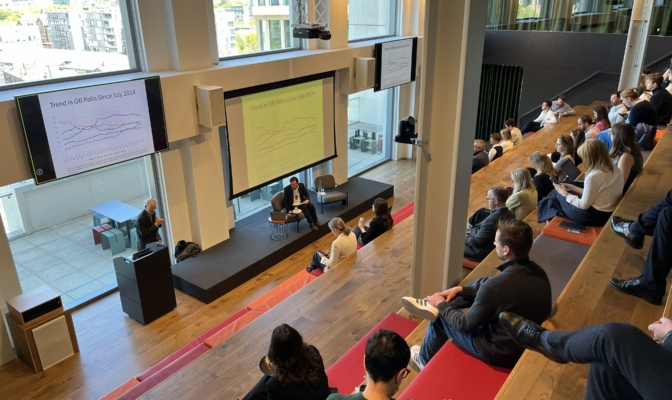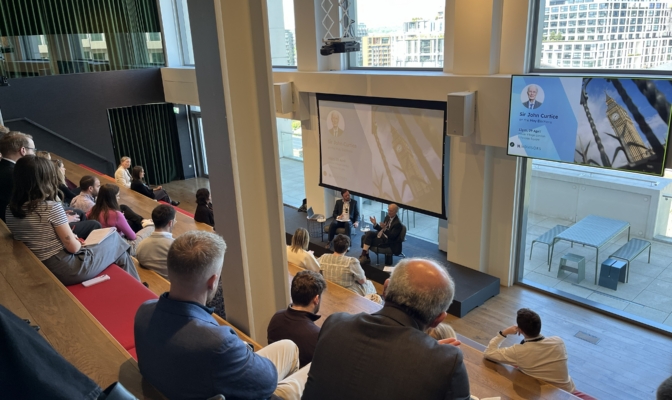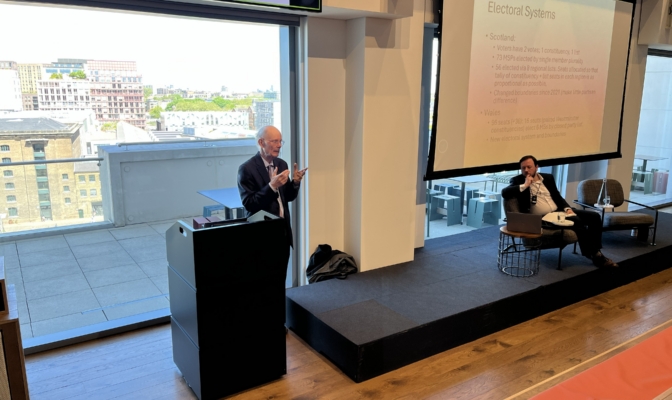

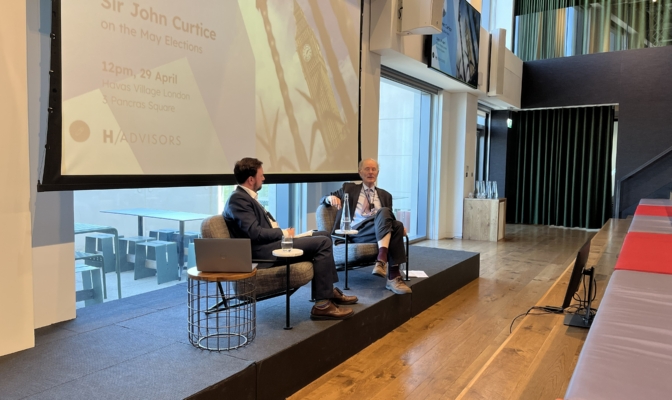
Yesterday, H/Advisors hosted Head of the Politics Department at the University of Strathclyde and Senior Research Fellow at the National Centre for Social Research, Sir John Curtice. Sir John delivered a candid and thoughtful presentation on the upcoming devolved and local elections happening on 7 May followed by an engaging Q&A session.
Key takeaways
Sir John opened by stressing the politically unprecedented times we find ourselves in, with polls showing Labour and the Conservatives being simultaneously challenged in a manner unseen in the UK for over a century. Both Reform and the Greens are operating in niche voter markets, but in the current fragmented political climate, capturing these niche markets may be big enough to combat the other parties.
English local elections
- Labour is defending half the seats up for grabs, the Conservatives one quarter, and the Liberal Democrats one eighth.
- Labour is set to receive 19% of the vote this year compared to 36% in 2021 and Conservatives 19% compared to 40%, defending mostly urban-based seats.
- Given this split, the winner may only need a quarter of the vote.
- Sir John offered a more positive outlook for Labour in London and predicted that it will be the outcome of the London vote that decides just how bad 7 May will be for Labour.
- The North East Labour-led county councils and the Conservative-led county councils in East Anglia are two further key battlegrounds to watch, with Reform UK well ahead in both sets of polls.
Scottish elections
- Sir John discounted the idea that an SNP victory in the Holyrood elections was an SNP ‘win’ but rather was the SNP losing less significantly.
- Polling shows that virtually no SNP voters from the 2024 general election will be voting for Reform, meaning all of Reform’s electoral gains are likely to be at the expense of the Conservatives and Labour.
Welsh elections
- Labour is set for their worst electoral defeat in Wales since 1922 when David Lloyd George ran for the National Liberals, with Labour placed to come third behind Plaid Cymru and Reform.
- The narrow Plaid Cymru majority expected would mean a Plaid Cymru First Minister, which could mean a Welsh government seeking further devolved powers.
Conclusion
- The next general election is three years off, and a lot can change between now and then. However, these local elections will be “an interaction between protest and ideology”, as there has been a loss of confidence in institutions and the traditional governing parties.
- Sweeping gains in the local elections will provide the insurgent parties access to the most effective recruiters for wider support (local councillors) and provide electoral credibility.
- The mobilisation of Reform UK, who are contesting 99% of the available seats, and the Greens who are contesting 90%, shows that the “jack may already be out of the box”.